If the instantaneous beam is asymmetrical, then the effective beam in the map will typically end up having position-dependent asymmetry. Methods were developed for Planck for estimating this position-dependent beam, but these assume a white noise model when averaging the different scans that make up the observations. This works well for Planck, but is completely unrealistic for ground-based telescopes like ACT.
For an individual scan, ACT's noise is very correlated in along the
scanning direction, but has much less correlation in the orthogonal
direction. I made a simple toy program for
investigating the effect this asymmetric weighting has on the beam in
a patch that's small enough that one can assume straight scans.
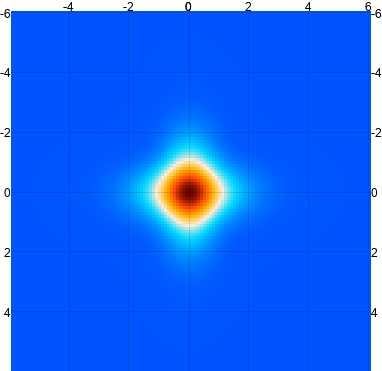
I considered a patch that's covered by one vertical scan and one horizontal
scan, with the noise power along the scanning direction being given by the
1/f noise spectrum 1 + (l/3000)**-4, and simulated a beam that's
twice as long as it's wide, with the long direction either parallel or orthogonal
to the scanning direction. The mean beam size was 2 arcmin FWHM.
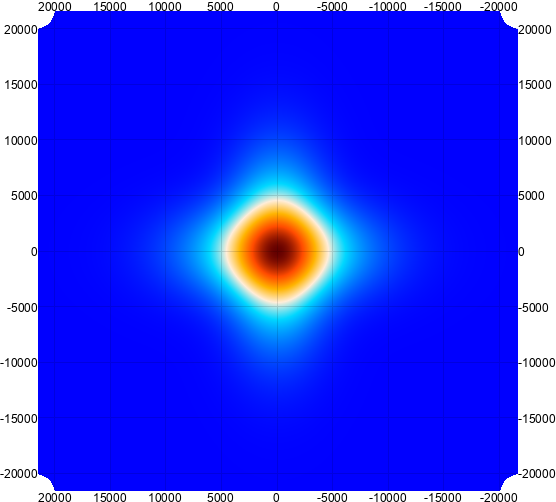
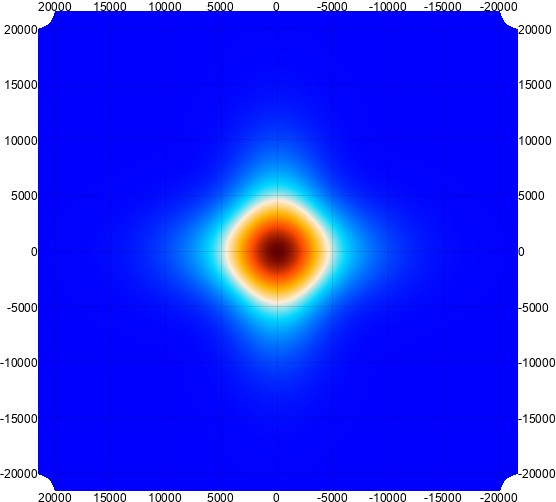
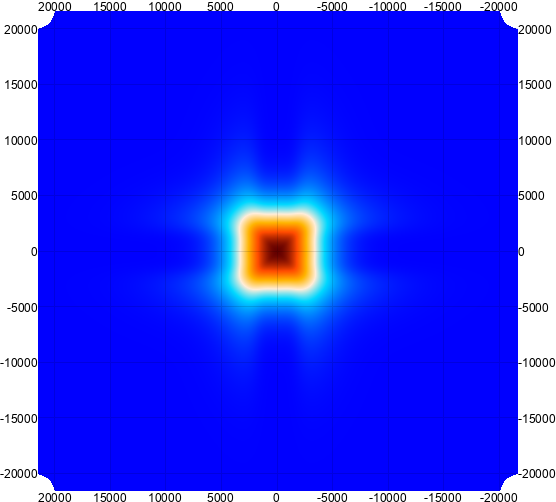
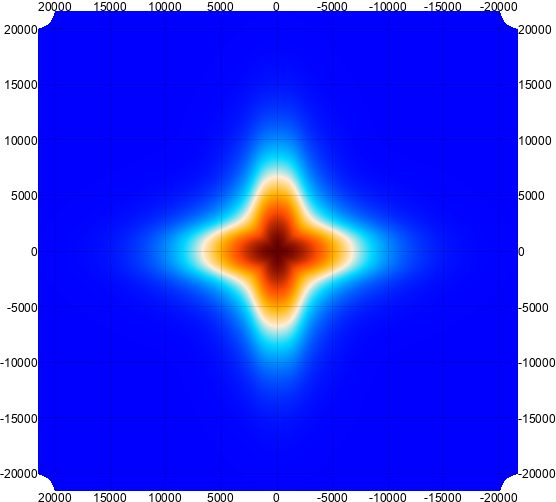
The plain average and inverse variance weighted average
total beams are shown in the table below.
| Parallel | Orthogonal | |
|---|---|---|
| Plain | |
|
| Weighted | |
|
| Parallel | Orthogonal | |
|---|---|---|
| Plain | 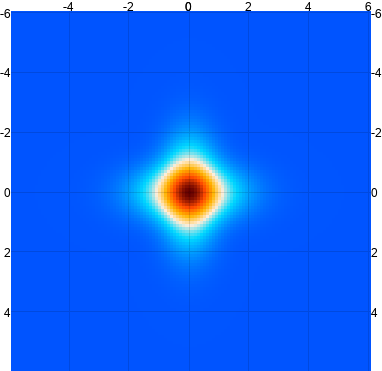 |
 |
| Weighted | 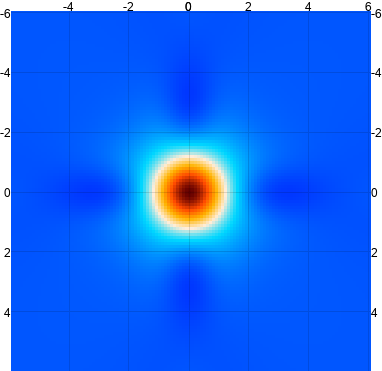 |
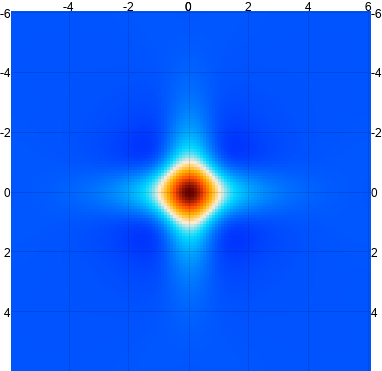 |
It's clear that ignoring the anisotropic noise weighting results in a large misprediction for the effective beam, at least for a highly elliptical beam like the one used here. It's also interesting to see that the beam is not as effectively circularized in the presence of correlated noise as it is with plain averaging.